
The thirtieth entry in the series where my wife Sabrina and I journey through the wide wonderful world of classic cocktails by crafting and drinking recipes together at our home bar. Today let’s show our appreciation to the iconic, aromatic masterpiece from New Orleans, the Sazerac.
Recipe:
- 2 oz Michter’s US*1 Rye Whiskey
- 1 Sugar cube
- 2-3 Dashes Peychaud’s bitters
- Rinse: 1 Bar spoon Vieux Pontarlier absinthe
- Garnish: Lemon peel
Chill an Old Fashioned glass. In a mixing glass, muddle the sugar cube and the Peychaud’s bitters. Add a couple drops of water to help dissolve the sugar if you want. Add the rye. Fill with ice and stir for 20-30 seconds. Rinse the inside of the chilled Old Fashioned glass with absinthe and dump it. Strain the contents of the mixing glass into the Old Fashioned glass. Express a lemon peel over the top and then rub it along the rim of the glass, and discard or drop it in.
Intro:
I love the Sazerac. I’m not even much of a whiskey cocktail guy, but man, I love the Sazerac. I love the taste, the smell, the appearance. How a well-made glass just seems to carry itself with an air of dignity and quiet badassery. How it’s the standard bearer for cocktails in New Orleans, a city that I love. How it incorporates absinthe, a spirit that I love. How the word Sazerac sounds cool.
Sazerac.
It’s a cool word, man. It’s got a damn z in it.
It’s a cool drink, too. And a damn good one, and pretty much everyone agrees on that. Including the fine folks in New Orleans, the birthplace of the Sazerac, who designated it as their official cocktail in 2008. And they know how to drink.
But, enough with the fawning. Let’s get to some information…

Booze Basics:
The Sazerac is a direct descendent of the original 1800’s cocktail formula of spirit, sugar, water, bitters, but with an amped up aroma and a specific bitter.
First, we have the spirit, which, in the case of the “modern” Sazerac, is rye whiskey. Rye is the primary player here, of course, the alcohol backbone, contributing familiar rye characteristics of spiciness, pepper, grain, oak. It defines the drink with its bold, complex flavor.
Next is the small addition of sugar to offer balance to those heavy whiskey flavors along with just a touch of sweetness that complements the Peychaud’s bitters.
The water addition comes from the ice used when you stir the drink, which of course, cools it, but also dilutes it just enough to get some additional balance, softening the alcohol bite, allowing some of the subtler flavors to peek out.
Note that a standard Sazerac is not served over ice, though. It is intended to slowly warm as you sip it, and it doesn’t want any more diluted water than what it received from the initial stirring glass.
As mentioned in the recipe, you can also add a squirt or two of water on top of the sugar to help dissolve it so it blends in better when you pour in the rye and doesn’t leave so many little sugar granules stuck to the bottom of the glass.
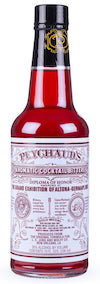
The Peychaud’s (pronounced “PAY-shohz”) bitters are really what makes the Sazerac a Sazerac, and not just some Rye Old Fashioned. It replaces the clovey, cinnamony, baking spice notes that you’d get from Angostura bitters with lighter floral and herbal notes, along with flavors of cherry and anise (black licorice). Perhaps this anise taste was what inspired folks to try adding absinthe in the early days?
Oh and Peychaud’s bitters are red, and that color really pushes its way into the drink, giving a Sazerac its characteristic ruby glow.
The Sazerac’s major aromatic contributions come from the absinthe and the lemon peel. The absinthe brings an intense herbal and anise aroma, which complements the anise flavors from the Peychaud’s. And then you stack the citrus aromatics from the lemon peel directly on top of that, and you’ve got yourself an aromatic blast that will kick your nose’s ass.
What’s with the absinthe rinse?
As you’ll notice in the recipe, we don’t add the absinthe to the drink, we flavor the glass with it. Meaning, we drop a small spoonful of absinthe into the empty chilled glass, and then slowly swirl it around to coat the interior, and then dump it.
Why do we do this rinse step rather than just pouring some into the cocktail itself?
Well, absinthe is intense, with a powerful anise fragrance that alone can hold its own against the heavy vapors from the rye. By coating the glass, we’re spreading that expressive aroma across a large surface area, ensuring you can get a big ole’ whiff of it with each sip.
Flavorwise, absinthe is quite bitter, thanks largely in part to its notorious wormwood ingredient, plus it’s got a burly alcohol percentage. Even a small addition would fundamentally change the character of the drink. The aroma is all you need. Your brain’s going to use it to tweak the perception of flavor, anyway.
Origin Story:
Peychaud’s and Cognac
The story of the Sazerac starts on Royal Street in New Orleans, where a fellow named Antoine Amédée Peychaud from Saint-Domingue (present day Haiti) opened up an apothecary in the 1830s. Here he developed a formula for aromatic bitters, originally intended for medicinal purposes, but like a lot of herbal remedies at the time, also happened to pair quite well with booze.
Peychaud would mix his bitters with brandy, in what some folks consider to be an early iteration of the Sazerac. Or at least a step in that direction.
Interesting sidenote, but according to lore, Peychaud supposedly served his brandy/bitter mix in a French egg cup called a coquetier, which Americans would mispronounce as “cocktail,” thus introducing that word into the drinking lexicon. Well, it’s not true. The word “cocktail” as a mixed drink appeared in print long before Paychaud had entered the scene. But it’s a good story anyway, and still gets tossed around now and again.
Anyways, a little while later, a fellow named Sewell T. Taylor entered the scene. He was a former bar owner turned New Orleans agent/importer for a French cognac called Sazerac-de-Forge et Fils. Soon his former bar, the Merchant Exchange Coffee Shop, was selling this fine French cognac that Taylor was repping, and their popular cocktail was a mix of it, Peychaud’s bitters and sugar.
The bar would subsequently change hands once or twice and later become the Sazerac Coffee House. Its namesake cocktail, known by now as a Sazerac, would ultimately be New Orlean’s biggest contribution to the cocktail world…
Although surely there’s some drunk guy currently stumbling down Bourbon Street who would argue that this distinction should go to the Hand Grenade.
The Rise of Rye
The original Sazerac being cognac-based makes sense when you consider the strong French presence in New Orleans culture at the time, plus NOLA was a major port city with access to French imports, including, yep, lots of cognac.
In the second half of the 1800s, though, Europe was hit by a brutal infestation of phylloxera, an aphid-like insect native to North America that was accidentally introduced into their vineyards, decimating a good percentage of them and nearly destroying the European wine industry. This led to a supply shortage in both wine and wine-distilled spirits like brandy and cognac. Other spirits, like grain-based whiskey, soon filled the void, and over time the Sazerac evolved into a rye whiskey drink.
Absinthe and Herbsaint
The phylloxera outbreak that clobbered the world’s primary source of wine and wine distillates was also a factor that contributed to the massive growth in absinthe consumption at that time, especially in France. With New Orleans having such a heavy French influence, it had a thriving absinthe culture as well. In fact, I’d argue that New Orleans is the only U.S. city with any notable absinthe history.

As for who decided to introduce the absinthe rinse to the Sazerac, it’s cloudy, but it’s often credited to Leon Lamothe, a bartender at NOLA bar Pina’s sometime around 1870. That timeline does coincide with absinthe’s most popular period.
In 1912, the U.S. banned absinthe, which was by now a stable ingredient in the Sazerac. Herbsaint soon entered the market as an anise-flavored alternative to absinthe, free of the dreaded wormwood ingredient that everyone was so (incorrectly) afraid of, and it took absinthe’s place in the cocktail.
Absinthe was re-legalized in the states in 2007, but after decades as the trusted anise aroma ingredient, Herbsaint was pretty well locked in. These days you’ll often still see it used in many Sazerac recipes, especially in New Orleans. But many folks have also moved back to rinsing with absinthe to follow tradition, and because absinthe is cool and still kind of mysterious for some reason.
Recipe Rationale:
Michter’s US*1 Rye Whiskey: Michter’s is my goto for rye. The US*1 is delicious, but it’s also kind of an easy drinker, so some folks may prefer something bolder. Worked great for me, though, and its mild sweetness played very well with the other ingredients.
Sugar cube: You can substitute this with ¼ oz of 2:1 simple syrup, but I like a cube and welcome the opportunity to do some muddlin’. I used a single cube of regular ole’ Domino Premium Pure Cane Sugar Cubes, by the way.
Peychaud’s Bitters: You really gotta go with Peychaud’s if you want to remain true to the drink. Easily available in any liquor store.
Vieux Pontarlier absinthe: The brand of absinthe isn’t important, really. Any legitimate one from the liquor store should give you that intense anise/fennel aroma that you’re looking for. If you don’t have a bottle available, Herbsaint certainly works, and maybe Pastis if you’re in a punch.
Lemon peel: Don’t skip on this. Rub it along the rim of the glass and let its scent pile on top of the absinthe vapors for some aromatic awesome. Traditionally, the peel was not dropped in the drink, but please do so if you prefer to see things floating in there.
Verdict:
“This is a strong drink. Not one of my favorites. It’s got… hmm… well, I could certainly only drink one and I’m not sure in which environment I’d choose to do so. Is it a before-dinner drink or after-dinner drink? It’s got “study” vibes. Like, “in the study with a knife.””

Sab
“One of my faves for sure, and I love how the Michter’s tastes in it. I really dig the smell of Vieux Pontarlier absinthe, so I certainly enjoyed the aroma of this drink. The bitters are so perfect here, really tying the sweet together with that spicy rye. And the lemon gives it that critical extra depth that just punches it up into perfect cocktail territory. Hell yeah.”

Bones
Sources and Further Reading:
Sazerac House – How the Sazerac Became the Official Cocktail of New Orleans
Sazerac – “Our Story”
Difford’s Guide – Sazerac (New Orlean’s Style)
Next (Coming Soon) >>
Leave a Reply