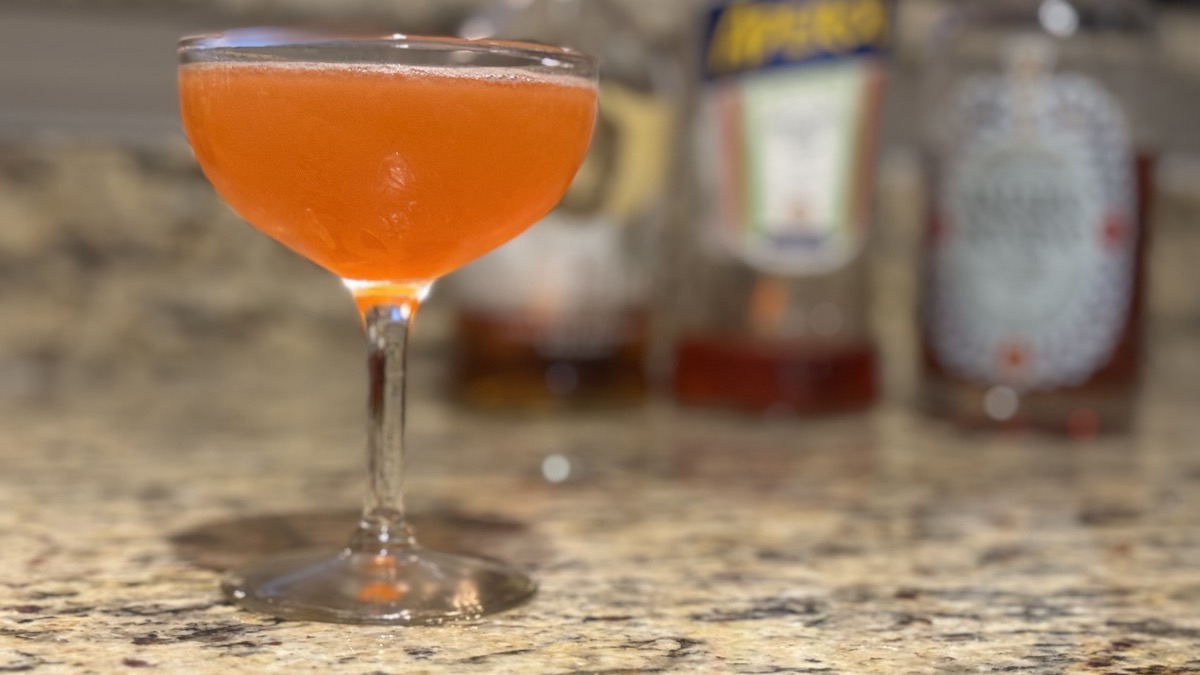
The twenty-sixth entry in the series where my wife Sabrina and I journey through the wide wonderful world of classic cocktails by crafting and drinking recipes together at our home bar. Today let’s probe this modern classic and equal parts par excellence, the Paper Plane.
Recipe:
- 3/4 oz Buffalo Trace bourbon
- 3/4 oz Aperol Aperitivo
- 3/4 oz Amaro Nonino Quintessential
- 3/4 oz Fresh lemon juice
Add all ingredients to a shaker with ice and shake hard (approx 10-15 seconds). Strain into a chilled couple glass. Garnish with a little paper airplane if you’re feeling crafty and want to make one (I don’t).
Intro:
Prior to my “classic” cocktail making journey that I set off on last year, I had no experience with a Paper Plane. Well, except for that cool little cocktail bar that existed in Decatur, GA for a brief time called Paper Plane* which I assume was named as an homage to the drink, and which was a sister bar to the cool sandwich joint above it where you could often find me hunched over a can of beer. So I guess, while I wasn’t drinking a Paper Plane, I was physically drinking-adjacent to a Paper Plane. That counts?
This “Making Classic Cocktails at Home” series originated as a simple list of all the cocktails that I could rattle off the top of my head (with an acknowledgment that I was very loosely using the term “Classic Cocktail” to mean “Cocktail that must be old and well-known if I’ve heard of it”), and a plan to rabbit hole into each one until I knew far more than was practical or necessary to enjoy it. Paper Plane was not on the original list. It wasn’t even on my radar.
As I read more and more about the cocktail revolution of the early 2000s, though, I learned that this recent renaissance not only revitalized countless classic drinks of old but it also introduced some highly influential new ones that were quickly looked upon as classics. Paper Plane is one of those. In fact, it’s arguably a more legitimate classic than many of the other drinks that originally landed on my list. And it’s now one of my favorites.
So let’s go ahead and get nerdy on it.
*Note: After a couple years, Paper Plane’s owners converted it to a Tiki Bar called S.O.S., and it rules. It’s a must-visit at the top of Decatur’s long list of must-visits for food/drink.
Booze Basics:
Paper Plane is an equal parts drink, like a Last Word or a Negroni, which means that you pour an equal amount of each ingredient. Equal parts drinks are simple, but the ones that do it right often end up being some of the most interesting. Inventing a good one is tougher than it sounds, however. Every ingredient plays an equal role, both balancing and uplifting each of the other ones, so there’s no place to hide an ingredient that doesn’t want to be a team player. It’s a delicate dance and it only works well with select combinations.
In reading up on the Paper Plane, I saw many comparisons to the Last Word cocktail. Not in flavor, but in structure. The Last Word, also a 4-piece equal parts drink, consists of gin as the base spirit, Chartreuse for the herbal complexity, Maraschino liqueur as the sweetness modifier, and lime as the acid. The Paper Plane consists of bourbon as the base spirit, Amaro Nonino for the herbal complexity, Aperol for the sweetness (as well as bitterness), and lemon for the acid. Both end up being a perfect balance of spirit, bitter herbal, sweet and citrus, yet flavor-wise, they’re miles apart.
Although all the ingredients contribute equally in a Last Word, what really makes it memorable is the Chartreuse, and how nicely Chartreuse’s intense flavors end up playing with the other ingredients. In a Paper Plane, I’d credit that role to the Nonino addition, yet its contribution comes with slightly less bravado than the Chartreuse.
I want to dig further into the amaro contributions, but first let’s talk garnish. You’ll see that most Paper Plane recipes online suggest putting a little paper airplane on top of the drink as the garnish. Ok sure, that sounds fun.
I gave it a try with a piece of origami paper, folding and unfolding the damn thing over and over for about ten minutes, realized that I had no idea how in the hell to fold a paper airplane nor could I even understand the awkward instructions that I found online, got pissed off and threw the mangled piece of paper on the ground. So my version of the Paper Plane will forever be the garnishless kind.
Fortunately, if you’re a fold-fail like me, you can simply spin it by calling yourself a traditionalist. The originator of the Paper Plane cocktail did not include a little paper airplane atop his drink either, or any other garnish for that matter, as he didn’t want to disrupt the froth on top. That creative little ornament was added by others retroactively. So leave it off if you like!
On Amaro:
Amaro is a critical component in the Paper Plane. But what is amaro? Or, in its plural form, amari? Well, at a very high level, amaro is a bitter sweet liqueur, traditionally Italian, flavored by an infusion/maceration of botanicals such as herbs, roots, bark, flowers, citrus peels, spices. “Amari” means “bitter” in Italian.
Amaro is a wide ranging category that is not bound by strict classifications or standards in the same way that, say, bourbon is. You can guzzle one down in many different ways: neat or over ice, room temp or chilled, bare or with a garnish (typically an orange), as an aperitif or a digestif, etc. It’s kind of all over the place, with many different styles and many different brands, and with some debate as to whether certain brands even belong in the amaro category (like Aperol or Campari, for instance).
A few examples of commonly-known amari would be Fernet Branca, Cynar, Monte Negro, and the notorious cold purple shot from that humming box behind the bar, Jagermeister. My favorite is Eno Amaro from local Decatur distillers, Murrell’s Row. And of course, you can’t forget the beloved Malort from Chicago (which is technically a bäsk liqueur, but close enough). If you’re not familiar with Malort, be sure to order a shot of it next time you’re at a good dive bar. Trust me, you’ll be fine 🙂
Amaro Nonino Quintessential:
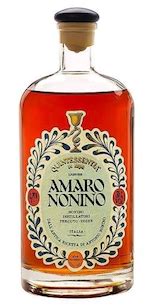
Amaro Nonino comes from the Nonino Family in Friuli, Italy. The Noninos are known for their grappa, a spirit distilled from pomace (the grape skins, seeds, etc leftover from winemaking), and credited with boosting grappa’s reputation in the 70s from that of a rustic moonshine into a legitimate, well-crafted spirit.
Amaro Nonino is made from the family’s grape distillation products like their ÙE, a spirit distilled from whole grapes, and botanicals such as bitter orange, saffron, rhubarb, tamarin, and herbs, and aged in small barrels. It has a medium light body, a nice bright fruitness, and a moderate bitterness.
The Nonino brings forth that exciting herbal blast in the Paper Plane, along with some mild orange character to partner it with the Aperol. It serves as sort of a connector between the bourbon and the Aperol.
Aperol:
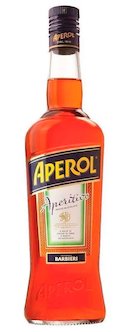
Aperol originated in 1919 by brothers Luigi and Silvio Barbieri in Padua, Italy. The name “Aperol” comes from the French word for “apértif” or “apéro”. Accordingly, Aperol is classified as an Italian bitter apértif. So, in general it would fall under the Italian bitter liquor, or amaro, category, and you’ll often see it shelved with the amari at the liquor store, but it’s more specifically an aperitivo bitter. Same with Campari.
Aperol brings the sweetness to the Paper Plane along with notes of bright orange peel and a prominent herbaceous bitterness. It balances out the lemon juice and softens up the bourbon, lightening the drink overall.
Note: For a great read on Amaro and a great looking coffee table book, I recommend “Amaro: The Spirited World of Bittersweet, Herbal Liqueurs” by Brad Thomas Parsons
Origin Story:
As of this writing, the Paper Plane is still not even old enough to drink. It was invented in 2007 by Australian-born bartender Sam Ross, who was one of the defining figures of the craft cocktail revival. At the time, Ross was working at Milk & Honey, a hugely influential New York bar and one of the leaders of the revival, but he actually invented the Paper Plane for the opening of a new bar in Chicago, The Violet Hour.
The name for the cocktail comes from the song “Paper Planes,” by M.I.A. No real connection to the drink, from what I understand. Ross was just listening to it a lot at the time.
Sam Ross also created The Penicillan, another drink from the cocktail renaissance era that has also achieved modern classic status.
Recipe Rationale:
Buffalo Trace bourbon: We’re not trying to showcase a bourbon with this drink, it’s just one of four ensemble players. We’re looking to pull some nice bourbon flavor characteristics, though, like vanilla, caramel, and oak, all of which Buffalo Trace provides quite reliably. Along with a big booze backbone from the 90 proof. Using your pricey top shelf stuff would be wasteful here. Any quality mid-range will do you right. From what I read, Sam Ross uses Michter’s.
Amaro Nonini Quintessential: The standard recipe specifically calls for this brand, and I’ve always been a rule follower. So, Nonini it is!
Aperol Aperitivo: Same
Fresh lemon juice: As I always say, squeeze your own fruit. Drinking a cocktail with juice from a bottle is like drinking a Guinness straight out of a can.
Verdict:
“Very citrusy with the lemon up front and light bitterness in the back. Barely noticed the bourbon!”

Sab
“Tart and refreshing. The bourbon falls to the background but hangs around just enough to remind you that it’s there, and you’re glad that it is. The citrus and amaro taste great together, giving me boozy fruit punch vibes. The drink overall has a real “punchyness”, actually, requiring some effort to not just gulp the whole damn thing down in one go. All the flavors work together so well. It is a great example of balance, and a delicious drink. Going forward, I’ll probably have to make Nonini a standard bottle in my liquor cabinet, as I expect I’ll be making plenty of these.”



Leave a Reply