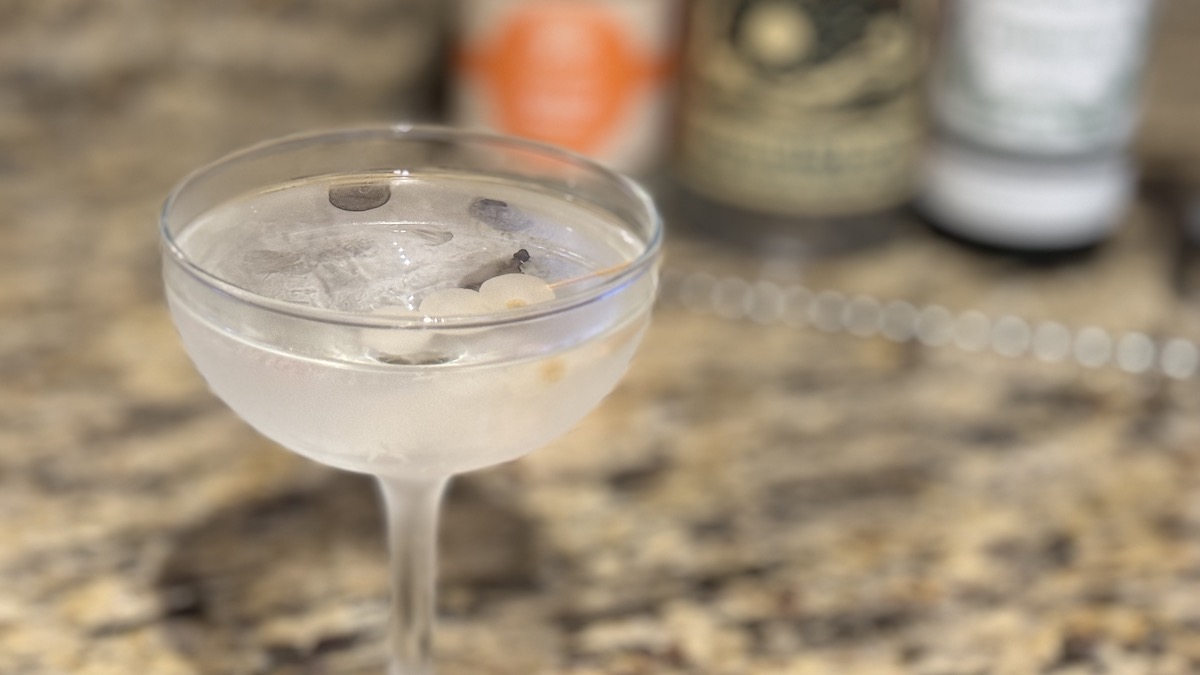
The eighteenth entry in the series where my wife Sabrina and I journey through the wide wonderful world of classic cocktails by crafting and drinking recipes together at our home bar. Today let’s return to our beloved Martini, but we’ll swap out the olive garnish with cocktail onions, magically transforming it into a Gibson.
Recipe:
- 2 1/2 oz Murrell’s Row Gin Mignonette
- 1/2 oz Dolin Dry Vermouth
- Garnish: Divina Cocktail Onions
Add the gin and vermouth to a mixing glass with ice. Stir for about 20-25 seconds for a bit of dilution but not too much. Strain into a cold coupe or Nick and Nora glass. Garnish with 2-3 cocktail onions.
Intro:
As you can tell from the recipe above, a Gibson is a Martini with a different garnish and a different name. That’s it. I’ve covered the Martini in an earlier post, so I could save us both a lot of time by just sending you over to that previous Martini post and suggesting that you simply swap out all references to “olives” or “lemon twists” with “onions,” and we can call it a day. But of course, why go and be all efficient and shit when there’s so much self-indulgent over-explaining that I can do instead, right? Right!
So let’s get started with some of that sweet over-explaining, shall we?
First, I’m pretty sure you know what a Martini is, but go ahead and check out my original Martini post anyway and then meet me back here. Godspeed.
Welcome back. What’d you think? Agreed, it was pretty much the Dostoevsky of home cocktail posts, wasn’t it? Cool, so what’s next?
Well, as I said above, a Gibson is a Martini, made the same way you would make any other Martini, but with cocktail onions as the garnish. This will make more of a difference than you may think. It’s going to transform your Martini from a crisp, clean cocktail hour drink into a savory, umami, slightly tangy dinner drink.
On Onions:
Since it’s the cocktail onions that make a Gibson a Gibson, I guess we should talk about onions for a minute.
What is a cocktail onion? It’s simply a pearl onion that has been pickled in a vinegar-based brine with other ingredients such as salt, sugar, various aromatics, and sometimes vermouth.
The quality of your cocktail onions is important. You want to make sure yours are crisp and crunchy, and not overly sweet and soft and mushy (like me, tee hee). A light touch of sweetness is good. Acidic is too, it will perk up the drink.
Here are a few suggested brands to get your started, which I confess I just pulled from the internet. I’ve actually only tried the first one.
- Divina Cocktail Onions: Not too sweet and not overly flashy, just crisp, simple, and savory.
- Sable & Rosenfeld Vermouth Tipsy Onions: A more elevated, cocktail nerdy onion. Soaked in vermouth. Richer and sweeter, tangy, and really dialed in for Gibsons.
- Old South Cocktail Onions: Crunchy, tangy, a little briny, and large. Louder and more expressive in a good way.
Vermouth Primer:
I couldn’t think of a lot to research specifically on the Gibson, so I figured I’d use this article as an opportunity to gather some basic data around one of its core ingredients – vermouth. I’ve been meaning to branch out from my current process of just pulling a bottle of Dolin from the fridge anytime a drink calls for vermouth. More importantly, it’s time for me to explore vermouths as straight drinks on their own and not just as cocktail ingredients. So I threw together this brief primer below to help me get started on my vermouth vision quest, and maybe you’ll find it useful too.
Similar disclaimer as the cocktail onions above: This is just info I’ve gathered online and not based on personal experience because I don’t have that yet.
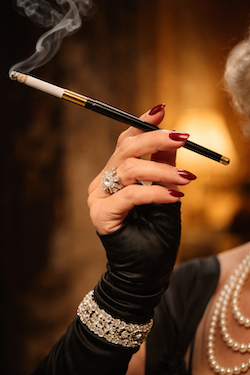
To start, vermouth is an aromatized and fortified wine. Aromatized, in that it has been infused with botanicals (herbs, roots, spices, citrus peels, etc), and fortified, in that it has been strengthened with a neutral grape-based spirit. Fortifying it increases its alcohol content (usually to around 15-18% ABV) and stability. It works well as an aperitif (pre-dinner drink to stimulate the appetite), and it pairs nicely with a charcuterie plate or maybe a cigarette on one of those fancy old holders.
Worth remembering that, although it has been fortified, it is still a wine and it will oxidize after you open the bottle, so keep it in the fridge and don’t let it sit in there for more than a few weeks.
There are three main types of vermouths: Dry, Sweet, and White. Dry is what you need for a Martini/Gibson, of course, but we’ll go ahead and look at the other two as well.
Dry vermouth is crisp, pale, herbal, sometimes a bit floral and sometimes a bit savory. Obviously great for mixing with gin and vodka, but also meant to be drunk straight, served in a well-chilled wine glass or coupe with an optional lemon twist.
Suggested starting bottles:
- Dolin Dry: Light and elegant. My go-to Martini vermouth.
- Noilly Prat Original Dry: More savory and structured than a Dolin. A good sippin’ dry.
Sweet vermouth is richer, dark reddish in color, sometimes spiced with vanilla/cocoa notes. Sweet, but more of a bitter sweet. Mixed in Negronis, Manhattans, etc. Or sipped straight, well chilled or over a large ice cube, with an optional orange peel.
Suggested starting bottles:
- Carpano Antica: Bolder, almost dessert-like, with strong vanilla notes.
- Cocchi Vermouth di Torino: Brighter, more citrusy, more balanced.
- Dolin Rouge: Lighter bodied, more balanced and restrained. Less sweet. Intentionally subtle. Designed for mixing in cocktails.
White vermouth sits somewhere in between dry and sweet vermouth. Pale in color. Sweet, but lighter and brighter than a sweet vermouth. Floral, with occasional vanilla. Doesn’t really have a famous cocktail associated with it like dry and sweet vermouth do. Drink it chilled or over ice with an optional lemon twist.
Suggested starting bottles:
- Dolin Blanc: A good baseline. Light, floral, balanced, with a touch of sweetness
- Lustau Vermut Blanco: Sherry based, giving it a deeper, nuttier core. Citrus peel, savory, and complex.
Origin Story:
Ok, now that we’re all vermouth snobs, let’s return to the Gibson for a minute and discuss where it came from. As with almost all the well-known cocktails, its origin is murky, but Liquor.com says that it may have been created by a San Francisco businessman named Walter D.K. Gibson in the late 1800s at The Bohemian Club. Apparently ole’ Walt carried quite a few strong opinions, including that eating onions would keep you from getting sick. I’m not sure how that belief leads to putting them in booze, but respect to Walter for drawing that conclusion.
Cocktail Wave shares that the Gibson may have actually been named after Charles Dana Gibson, a famous illustrator at the time, known for his Gibson Girl illustrations. Not to be confused with the Golden Girls Illustrations in my Bea Arthur Appreciation Powerpoint deck.
Difford’s Guide goes on to say that it’s a mashup. Walter Gibson is credited with removing the bitters from the Martini recipe (the original recipe had bitters) to make the minimalist Gibson/Martini that we know today, and Charles Gibson is credited with inspiring the onion garnish for it.
Like I said, the specifics are murky, but suffice it to say that the Gibson was named after a dude named Gibson. Do with that knowledge what you will.
The Gibson first appeared in print in the 1908 book, The World’s Drinks and How to Mix Them by William Boothby.
Recipe Rationale:
Murrell’s Row Gin Mignonette: Murrell’s Row’s special gin designed for making delicious Martinis and drinking them with oysters. Layered, smooth, botanical, and savory. You can refer back to my Martini post for other suggestions if you can’t get your hands on a bottle of Murrell’s Row, but you should try.
Dolin Dry Vermouth: As mentioned above, this has always been my defacto vermouth for Martinis and I’m happy with it. But I’m also excited to start dipping my toes into some of the other fine options out there.
Divina Cocktail Onions: We already had this brand in the fridge so it was an easy choice. Worked very well. For more options, you can scroll back up to my suggestions that you just read a few minutes ago, and which I have never personally tried but am recommending nonetheless because why not.
Verdict:
“Whoa, so much gin, and I’m still not a gin person. But I’m sure it was good, since Bones appeared to really enjoy it.”

Sab
“Delicious. For the sake of science, I was really trying to dial in on the characteristics introduced by the cocktail onion alone, but it was difficult to determine where the gin stopped and the onion started, since that Murrell’s Row Mignonette is so dang flavorful. Nonetheless, it all worked really well together and made a fantastic drink. I’ve always loved a Martini with olives and I wouldn’t say I’m now a cocktail onion convert, but going forward, I’ll be happy to start ordering both a Martini and a Gibson. At the same time.”

Bones
Next (Coming Soon) >>
Leave a Reply