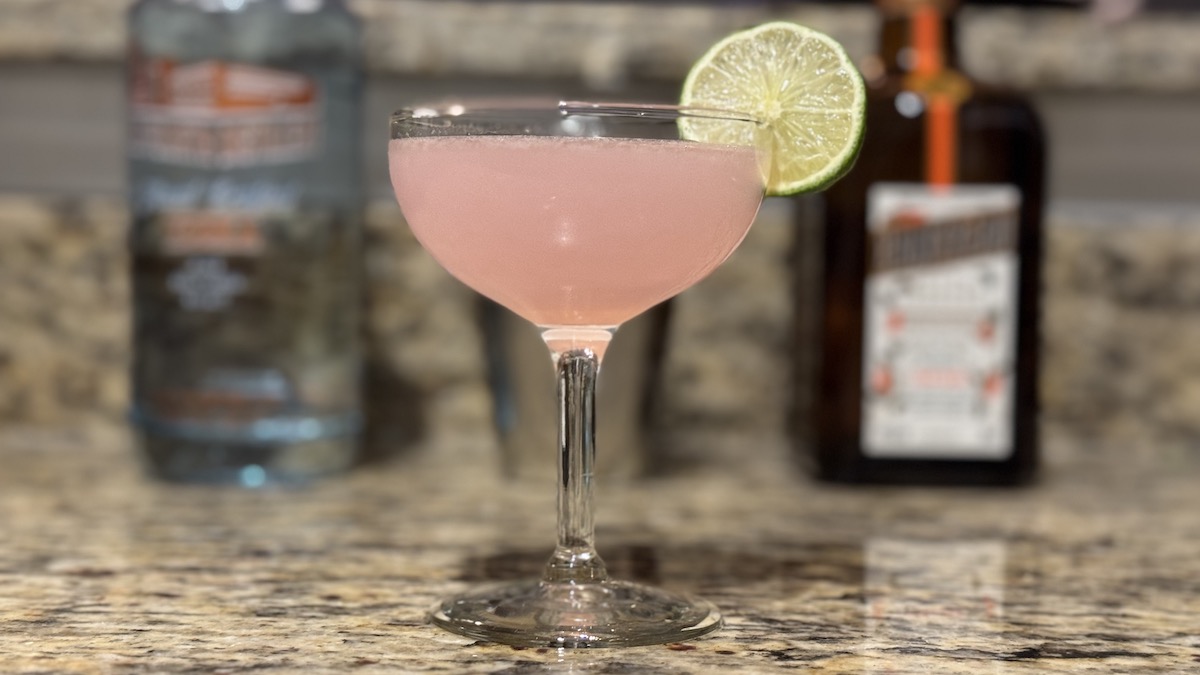
The fourteenth entry in the series where my wife Sabrina and I journey through the wide wonderful world of classic cocktails by crafting and drinking recipes together at our home bar. Today let’s take a look at the pink pinnacle of alcoholic allure that permeated nineties nightclubs, the Cosmopolitan.
Recipe:
- 1.5 oz Old Fourth Distillery Hand Crafted Vodka
- .75 oz Cointreau liqueur
- .75 oz Lime juice
- .25 oz Ocean Spray cranberry juice cocktail
- Garnish: Lime wheel
Pour all ingredients into a mixer filled with ice. Shake hard until cold, then strain into a chilled coupe or martini glass.
Intro:
It may not be totally accurate to call the Cosmopolitan (or “Cosmo” if you’re a young dazzling gal about town like me) a classic, considering that it’s only been around since the 80s, and most of the “classic” drinks that we’ve discussed so far date back to the 30s or earlier. But, when I originally started this boozy exercise of exploring classic cocktails, I used the term “classic” to loosely mean “drink names that I’m familiar with.” The Cosmo, of course, fits that definition. We’re all familiar with a Cosmopolitan, right? Hell, those of us who are over 40 couldn’t get away from hearing about the drink for at least a decade.
Not trying to throw shade on it! It’s a finely tuned cocktail, and its immense popularity through the 90s and early 2000s confirms that it was (or still is) considered a top of the line order by a wide swath of tipplers. Its popularity did, however, lead to a temporary oversaturation in clubs across the US, with groups of young aspiring socialites sloshing pink drink from martini glasses onto dancefloors while trying to emulate Carrie Bradshaw and the gang from Sex & the City, the hit HBO show that kicked off the Cosmo craze.
I don’t have any real memories of personally ever trying a Cosmo back in the 90s, but then again my scene in those days consisted mainly of flat beer in plastic cups, and the only cocktails ordered were jagerbombs. So, the Cosmopolitan that I made for this post was probably my first one.
And, continuing my recent trend of making cocktails that absolutely do not pair with the season, I enjoyed my very first Cosmo on the evening of Super Bowl Sunday. While most folks were sucking down cold lagers and hot wings in their team jersey, I was sipping on a Cosmo in a kimono.
I kind of wish I enjoyed the drink more than I did, because a “Cosmo in a kimono” has a nice ring to it, and brings me joy knowing how much it would piss off my friends if that became my thing.

Booze Basics:
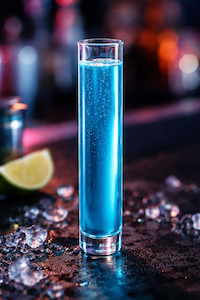
It’s worth noting that the recipe for a “true” Cosmopolitan, the one that was popularized in the 80s (see below), calls for a citrus-flavored vodka. Traditionally, Absolut Citron. I didn’t have any, so I went with regular vodka-flavored vodka. Which meant that my Cosmopolitan recipe has the same ingredients as a Kamikaze recipe (Vodka, Orange Liqueur, Lime) but with an added splash of cranberry, and sipped from a stemmed glass rather than slurped from a test tube shooter (which is how I would have imbibed a Kamikaze back in the Cosmo era).
You could also say that the basics of a Cosmopolitan follows the sour cocktail pattern (spirit, citrus, sweetener), where the sweetener is an orange liqueur instead of, say, a simple syrup or sugar. Simple syrup/sugar contributes to a sour drink by balancing out the acidity from the citrus, but doesn’t actually add another flavor. Orange liqueur, however, not only balances out the citrus but introduces new flavor characteristics, aroma and bitterness. By introducing both a sweetness and a bitterness which counters itself, the orange liqueur keeps the drink from being too sweet. It’s also helpful for cutting down the vodka flavor.
Cocktail Codex by the folks at Death & Co. (see my book review here), which classifies all cocktails under one of six “templates,” identifies the Cosmo as part of the Sidecar template (a spirit balanced by a flavorful liqueur and a highly acidic citrus juice). This is the same family where they place the Margarita. And it makes sense. A Cosmo is a simple offshoot of a Margarita, using vodka instead of tequila (and adding cranberry juice) or a Sidecar, using vodka instead of brandy and lime instead of lemon (and adding cranberry juice).
Speaking of cranberry, take note that its primary purpose in this drink is to give it that chic pink color. You don’t want your Cosmo tasting like a Vodka Cranberry, so go easy on the juice! I went with .25 oz for my recipe, but I probably could have safely bumped it up to .5 oz without repercussion.
Origin Story:
Man, this drink isn’t even 50 years old yet, and just like the cocktails that are significantly older, its origin story is already debated. The most common tale is that it was invented by Toby Cecchini at the Odean in New York City back in the late 80s and spiked in popularity in the 90s after becoming the drink of choice in Sex and City.
Liquor.com offers up a slightly different history, crediting its creation to a Miami bartender in 1985 named Cheryl Cook. They acknowledge Toby Cecchini, on the other hand, for popularizing the drink and for dialing it in with the specific ingredients that became Cosmo canon – Absolut Citron, Cointreau, lime, and Ocean Spray cranberry juice cocktail.
Considering that Sex & the City (a New York-centric show) was so enamored with the drink, it would make sense to credit it to the bartender from New York. However, when you slap a bright green lime wheel on top of that hot pink drink, it’s hard not to get 80s Miami vibes from that color scheme, ain’t it?

Originator aside, the sudden ubiquity of the drink did lead to many less than stellar versions of it popping up in bars and clubs across the states, with everyone trying to cash in on its surge in popularity. This was a challenge to its reputation, as it started leaning towards more of a fashion statement than a drink for the discerning palate.
The Margarita and Daiquiri, as you’ll recall, also faced a hit to their legacy due to their immense popularity among the masses. In their case, though, they were rebranded as frozen drink machine staples, a fate which did not befall the Cosmo to my knowledge. Or did it? Hmm, if not, maybe it should have. It would work.
Recipe Rationale:
Old Fourth Distillery Hand Crafted Vodka: As mentioned above, the traditional/original Cosmo recipe uses Absolut Citron. I reviewed enough recipes online that used regular vodka to show that, while it may not be perfectly loyal to Cosmo lore, it’s common enough that I could rationalize not buying a bottle of Absolut. Nothing against Absolut, I just can’t think of any other future drink that I’d need it for. And it reminds me of my post-college roommate’s Maxim magazine collection.
Anyway, Old Fourth (O4D) is Atlanta’s first legal distillery since 1906, and has been making great spirits since their opening in 2014. They are now owned by Shortbarrel Brewing and have moved from the city to Norcross GA, but the quality of their product remains top notch.
Cointreau Liqueur: The original recipe calls for Cointreau, a type of triple sec, but in general, you could make do with any other orange liqueur if you tweak the recipe to account for it. Just don’t go for that cheap bottle of triple sec you always see at the liquor store, as the cheapness will reflect in your drink. I’ve seen a lot of different recipes for a lot of different cocktails that specifically call for Cointreau, so it’s worth having a bottle in your liquor cabinet.
I discuss the differences in orange liqueurs (triple sec, Cointreau, orange curacao) in my Margarita post if you want a quick primer.
Lime Juice: I’ll say the same thing that I always do, get real limes and a citrus squeezer. Real, fresh juice makes all the difference. You’re kind of wasting good booze if you mix it with non-fresh juice.
Ocean Spray cranberry juice cocktail: This runs contrary to the sentence directly above regarding fresh juice, since I just grabbed a bottle of Ocean Spray off the shelf at Publix. But I think a fresh juice exception can be made for cranberry, especially in this drink where it’s primarily used for coloring. Also, I understand that Ocean Spray cranberry cocktail juice is what was used in the original recipe popularized by Toby Cecchini.
Verdict:
“It was good, but I tasted a lot of vodka. I think Dry January made me a little sensitive to the taste of alcohol. I liked the level of citrus in it, though. Very refreshing.”

Sab
“I enjoyed it, but just didn’t find it to be terribly exciting. Unlike Sab, I did not taste a lot of vodka, and I think the lack of a strong spirit base made it a little bland for me. Certainly not bad, but vodka just doesn’t add the same punch to these other ingredients that tequila does in a Margarita. I can see how this slightly subdued flavor combination would work for a lot of the drinking populace, though. And the light pink color of the drink in a stemmed glass is aesthetically pleasing for sure. Makes sense that this became such a popular drink, but I don’t see many evenings in my future where I’m sipping on a sexy Cosmo in my sexy kimono. As sexy as that may sound to you. It does, doesn’t it? Admit it.”

Bones
Next (Coming Soon) >>
Leave a Reply