I started my little website here as a platform to write about things that I like. I figured that much of the content would be alcohol-related because that’s always been an intellectual (and recreational) passion, but I’ve been surprised at how much time I’ve spent talking about cocktail making, a topic of which I’m admittedly quite the neophyte. I consider myself to be pretty well-studied in the drinking world in general, but mostly from the perspective of a beer drinker, with a couple decades of homebrewing under my belt and enough barfly hours logged at the pubs and breweries to comfortably exceed Malcolm Gladwell’s magic number for expert level. Not sure if I should be proud of that or not.
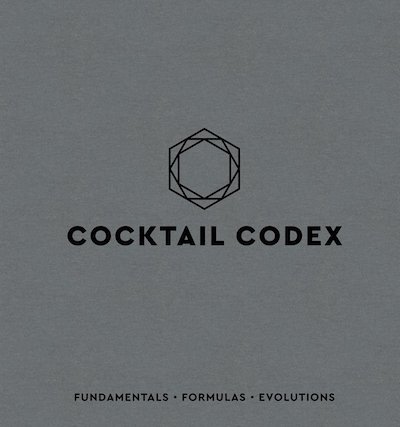
Strangely enough, though all those years I spent relatively little time thinking about cocktails. Until fairly recently, that is. Then once I did, as I tend to do with things, I quickly started obsessing over them. I credit a lot of this newfound obsession to the book Cocktail Codex and its predecessor, Death & Co: Modern Classic Cocktails.
Death & Co is the name of the bar in East Village, Manhattan that opened in the early 2000s by David Kaplan and Ravi DeRossi, and through its steadfast focus on quality spirits, inspired cocktail craftsmanship, loyalty to historical drinks paired with inventive creations of new ones, and a punkish independence injected into the bar scene, they became leaders and forefathers of the cocktail renaissance that barrelled its way through the 2010s and transformed cocktail culture to this day. If your local restaurant/bar has a thoughtfully curated drink program, the Death & Co folks are likely a large part of the reason why.
Through the years, Death & Co has expanded its business and influence, opening Death & Co sister bars in multiple states and outside the U.S., opened an online store of merch, bar tools, drinkware, etc, and authored books that have inspired and guided bar pros and amateurs alike.
Cocktail Codex is one of those books; a great looking coffee table-style book of methodology, history, recipes, and just general nerd stoke that thrilled the hell out of this excitable nerd here.
What really resonates with me, an analytically-brained former software guy who fancies himself a creative, is how the book balances its technical, analytical approach to making drinks with a whimsical creativity. It reminds me of my old beer brewing heroes who described their craft as equal parts science and art. Speaking of, while reading the book, I’d find myself reflecting back to my early days of homebrewing when I was just so damn excited about the beer world and I’d consume every sliver of data on the subject that I could get my hands on.
Cocktail Codex is divided into six chapters, each representing a root “template” cocktail which the authors describe and dissect, explaining why its specific qualities qualify it to be one of the core six, and then introducing all the other related cocktails that branch off of this template. This is an expansion of the “Potato Head” theory for building drinks that they introduced in the previous book, Death & Company: Modern Classic Cocktails.
The Potato Head theory, invented by legendary D&C bartender Phil Ward, basically proclaims that every cocktail has a base structure, and you formulate a new cocktail by simply swapping out individual component(s) of that drink while still maintaining that original structure. By following this methodology, you’ll not only better understand the relationships within the larger cocktail ecosystem instead of just memorizing their individual recipes, but you can craft up new ones with intention, being conscious of what kind of drink you’re trying to make and giving yourself a logical path towards it. Ward used this approach to create such famous cocktails as the Oaxacan Old Fashioned and the Final Ward.
In the book, each of the unique components that make up a drink are categorized as one of the following: base spirit, sweetener, modifier, and seasoning (if I recall correctly). It lays out how variations of these components combine to form each of the unique cocktail templates, and then explores how tweaking these components, Potato Head style, can yield a new drink within that template’s family. Or out of it, depending on the tweak.
As a quick nerd aside, I come from an objected-oriented java programming background where software design components were organized into “classes” and “instances” of these classes. If that means nothing to you, good for you. But if it does, suffice it to say these the authors appear to follow a somewhat similar methodology when mapping out the template cocktails and their offshoots. They could very well have used a UML diagram to represent a cocktail’s family, but they went with a spider diagram, which, for what it’s worth, is a better looking diagram.
I mentioned above that each of the six chapters covers one of the templates along with all the drinks that fall into this template’s “family.” These templates, which preside over the entire spectrum of cocktails, are the Old Fashioned, the Martini, the Daiquiri, the Sidecar, the Whisky Highball, and the Flip. Any cocktail that you can think of will fall under one of these templates and the authors explain why and how. I love the concept, and I love thinking of a random cocktail and trying to determine which family it lives in. Once a dork, always a dork.
After thoroughly walking you through the logic of what makes a template a template, each chapter then deep dives into other related technical elements, covering one or more specific types of liquors, associated glassware, serving techniques, etc. For instance, in chapter one – the Old Fashioned – they provide thorough primers on the whiskeys/whiskys of the world, the Old Fashioned glass, bitters (the “seasoning” component), proper stirring techniques, and how to make syrups. And of course, a shitload of recipes (both classic and Death and Co. originals) with beautiful photos of drinks. That’s a single chapter. With five more, all equally full of this kind of info, you’ve got yourself one hell of a reference guide.
Man, the analytical way that the authors walk through the process of building a cocktail kept bringing me back to my old homebrew days and my analytical process for building a new beer recipe. If I may be self indulgent for a moment, my process went something like this: I’d start by thumbing through my beer book library to gather as much general info on the beer style as I could, and then I’d reference Ray Daniels’ Designing Great Beers to pull some numbers on average proportions for the different grain and hop types for the beer style, then I’d pore through John Palmer’s literature for appropriate water chemistry and yeast strains, and then I’d start plugging data into the Beer Smith software and tweaking levels to adjust for ABV, IBUs, color, mouthfeel, etc. Once I had a recipe that fit within the style guidelines and aligned with my personal preferences, I’d whip out Palmer and Jamil Zainasheff’s Brewing Classic Styles to compare my recipe with an award-winning one and see if my all my recipe components fell within the same ballpark as a quantifiably “good” version of the style.
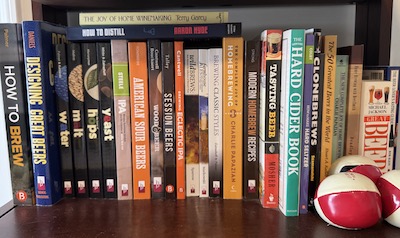
I loved my process for recipe building because it dissected a beer into its individual parts, educating me on them alone and also within the context of the larger beer. Before I ever stepped into the garage and fired up the burners under the kettles, I had a deep understanding of the fundamentals of the beer I was about to make. I knew what to do to make it turn out good, and I’d know it if I nailed it.
I experienced a similar nerd joy from this book when they’d break down one of the templates and then walk through the logical thought process for evolving it into another drink. For instance, start with a Sidecar, one of the six templates, that has the following defining traits: a spirit balanced out and seasoned by liqueur, and with additional balance from a citrus juice. Simple enough. Cool, now you just tweak the base spirit and the citrus, and bam, you have a Margarita. But, since these new ingredients will impact the balance that the original ingredients had achieved, you then tweak the proportions to re-balance…
Stepping through it like this boosts your innate understanding of cocktail basics and shows you how just six core recipes can turn into countless more. Ie – First understand what a Sidecar is, and then understand how it becomes a Margarita, and a clear pattern emerges.
This method of teaching made the whole thing click for me, much like, for instance, when it clicked as to how and which different malts contributed to different characteristics of different beers, and how small tweaks to proportions could impact the whole, potentially even pushing a beer into different style territory. Multiple mini-epiphanies like this made the creation process vastly more exciting.
You don’t need to be overly nerdy about the technical side of alcohol to benefit from this book, though. Just a healthy curiosity over the wonders of booze and a desire to learn more is enough to make it a worthwhile read. Or hell, if you just need a book of cocktail recipes, this one has you covered.
I do recommend, though, that if you want to use it as a learning reference, that you read its predecessor Death & Co: Modern Classic Cocktails first for maximum knowledge gain. There’s also a third one to round out the trilogy called Death & Co Welcome Home, which I have yet to read, but it’s on my list. All three are available at the normal online booksellers, but always best to buy directly from the Death & Co. folks if you can.
Have you read it yet? Or you gonna? Let me know what you think!
Leave a Reply