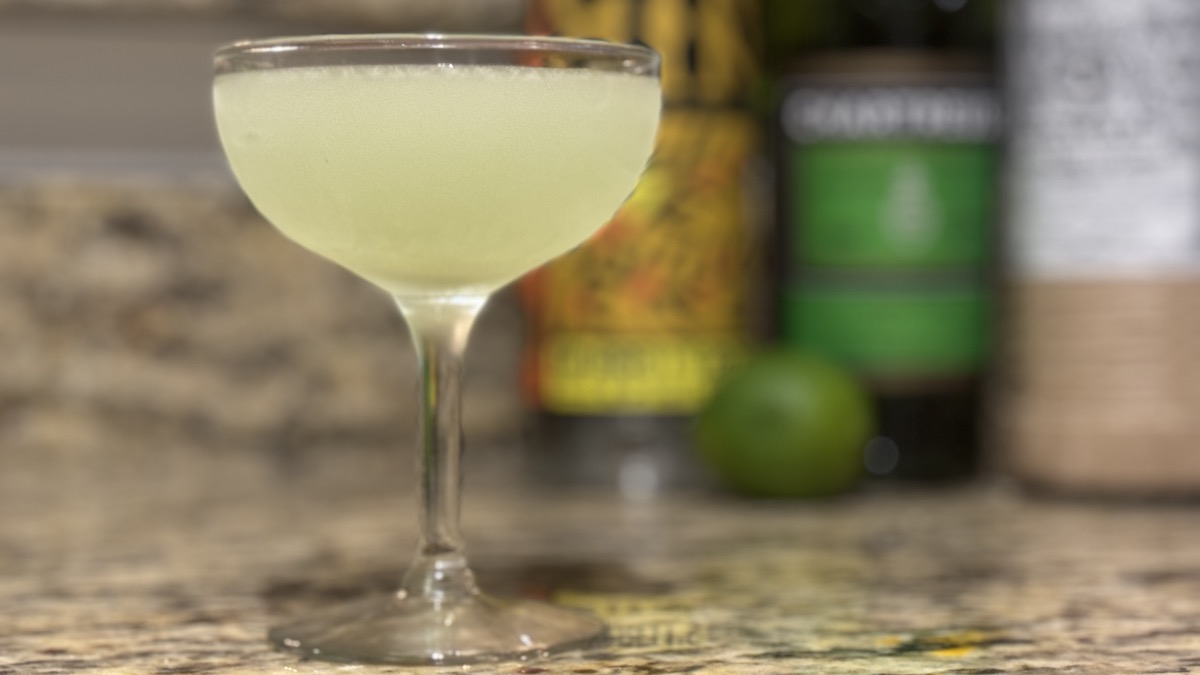
The nineteenth entry in the series where my wife Sabrina and I journey through the wide wonderful world of classic cocktails by crafting and drinking recipes together at our home bar. Today let’s explore the much adored drink with a simple recipe but a fascinatingly complex taste, the Last Word.
Recipe:
- 3/4 oz Murrell’s Row Gin Gin
- 3/4 oz Green Chartreuse Liqueur
- 3/4 oz Luxardo Maraschino Originale Liqueur
- 3/4 oz Fresh lime juice
- Garnish: Maraschino cherry (optional)
Add all ingredients into a shaker full of ice and shake until cold (about 20 seconds or so). Strain into a chilled coupe glass. Toss in a maraschino cherry as garnish, or don’t. Up to you.
Intro:
Some friends recently gifted a bottle of Green Chartreuse to Sab and me, and man was I giddy about it. I felt like I did back in the 80s on Christmas when I received a sweet new Laser Tag set or more recently when Sab gifted me a kimono for my birthday. Just full stoke for all the new possibilities that were unlocked (kimono included). My excitement for this fancy bottle of green stuff reminded me that I’ve been having a helluva good time making all these classic cocktails and deep diving into the ingredients, the history, and all the stupid old memories that spring forth.
I’ve said it many times before, but it really reminds me of my first few years of homebrewing where I was sucking down information with no abandon like a teenager sucking down the Benson & Hedges he stole from his parents’ Buick’s glove compartment. I didn’t even know all the new options that the Chartreuse bottle introduced, I only knew that I was pumped to find out. I did know, however, that my next cocktail to research and to drink would be a Last Word.
I’d never had a Last Word before, as far as I recall. But I was aware that it was a highly regarded classic cocktail with a very unique herbaceous taste, and that it had inspired some of the highly regarded modern classic cocktails like the Final Ward, Paper Plane, and Naked & Famous. Outside of that, I was going in cold.
Booze Basics
The Last Word is an equal parts drink, meaning that you use the same amount of every ingredient in it. A Negroni would be another popular example of an equal parts drink. It’s not really a common formula compared to the spirit/sweetener/acid/modifier formula where one or more ingredients will take on a lead role and the others will be supporting players. An equal parts drink is an ensemble cast performing in harmony, striking a true balance among all ingredients.
You might classify RUSH as the equal parts drink of the music world.
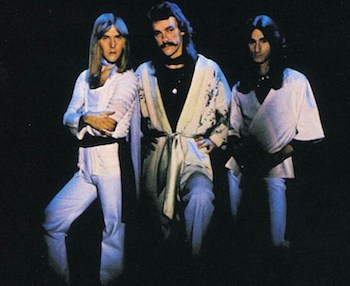
I think this is the first drink I’ve researched where almost every recipe I looked at followed the same exact ratio of ¾ oz of each ingredient, and the only variation was in the brand of gin. Worth noting that I probably only looked at 10 recipes or so, but still…
What’s cool about the Last Word is that it’s such a simple recipe to remember and to make (¾ of each, shake in ice, serve in a cold coupe), but tastes out of this world. The only challenging part, I’d say, is that Chartreuse isn’t the kind of bottle that’s often hanging around many folks’ liquor cabinet by default, and it can be a challenge to get one’s hands on one because production is limited and demand is much greater than supply. Why is that? Let’s get into it…
What is Chartreuse?
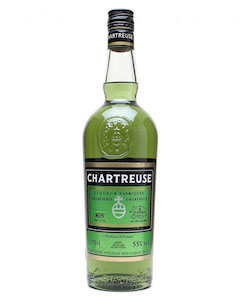
Chartreuse is an herbal liquor made from over 130 plants, herbs, and botanicals, distilled and aged in oak casks. It has a very unique and complex flavor, with powerful notes of mint, anise, pine, pepper, and honey. It also ages well for a liqueur, changing in taste and becoming even more interesting as it grows older.
There’s a Green Chartreuse (used in this drink) and a yellow Chartreuse. Green is the strong one (55% ABV). It’s bright, intense, herbal, spicy and even a little bit sweet. Yellow (44% ABV) is mellower, softer, floral and sweet.
Chartreuse is an intriguing spirit born from an elaborate recipe, and if you want to know what makes up those 130+ ingredients, good luck. You’ll have a better chance of chasing down Colonel Sanders’ original secret recipe of 11 herbs and spices.
There are only two folks at a time who have knowledge of the entire Chartreuse recipe, and they ain’t talking. Also, they’re monks.
In fact, Chartreuse has been made by a group of monks – the Carthusian Order – way up in the French Alps since 1605. The recipe comes from a manuscript for an “elixir of long life”, and the Order spent more than a century refining it. There’s a long and storied history of the Carthusian Order, which includes them being forced to abandon their monastery due to wars, eventually returning to the monastery, losing the recipe, eventually recovering the recipe, having to sell the recipe, eventually regaining their financial independence and repurchasing the recipe, and on and on. It’s a fascinating, centuries’ long journey, and it continues to this day with the monks of the Order still producing their beloved Chartreuse, preserving their sacred tradition.
This all goes back to the whole supply and demand thing I mentioned earlier. In 2019, the monks decided to cap production levels at 1.2 million bottles a year rather than expanding to meet the continually growing global appetite for their product. Their reasoning was that any increase in their facilities, distribution channels, etc also becomes an increase in environmental impact. Also, it’s more important to them to simply “protect their monastic life and devote their time to solitude and prayer.” In other words, chill, bros.
This is noble and badass. And it’s a welcome challenge to the ubiquitous “win at all costs” ethos, one that we haven’t seen since soul surfer Chandler introduced Rick Kane to the true spirit of non-competitive wave riding in 1987’s North Shore.
Apologies for the obscure 80s movie reference – I certainly wasn’t aiming for the masses with that one.
The story of Chartreuse and the Carthusian Order is well worth digging into, and I have not done it justice. So here’s a handful of brief but informative resources if you’re interested:
- Chartreuse website
- Chartreuse Wikipedia
- Liquor Librarian: Navigating the Chartreuse Shortage
- Vive Le Vin: Chartreuse FAQ: Everything You Need to Know About the Green Liqueur Shortage
Cool, but what is Maraschino Originale?
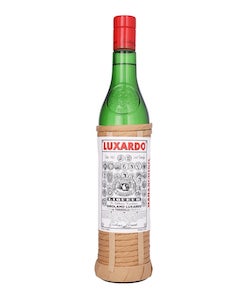
So we’ve covered Chartreuse, but what about that other ingredient that we haven’t seen in any of the drinks we’ve made so far, Luxardo Maraschino Originale liqueur?
Maraschino Originale is a clear cherry liquor made from marasca cherries. All parts of ‘em – the fruits, pits, skins, even the leaves. It’s fermented, distilled into a spirit, and then aged. The end product is slightly dry, nutty (from the pits) and funky. The name may lead you to think that this spirit tastes like grenadine or even maraschino cherries, but it very much does not. It’s not the same thing. It’s not even red.
The maraschino style originated in what is now Croatia, which is home to the marasca cherry. Luxardo the company was formed in 1821 and started making maraschino in what is now modern day Zara, Croatia. Luxardo moved to Italy after World War II and remains there today.
Although Maraschino Originale is not maraschino cherries, Luxardo does indeed make maraschino cherries. They’re delicious, and they’re much different than the generic maraschino cherries you’ll find in most grocery stores which are dyed red, heavy in corn syrup, and artificially flavored to make them basically taste like candy. Luxardo cherries are made from real marasca cherries (same as the liqueur) with no artificial dyes and no corn syrup, and they’re tart, dark, and rich, whereas the liqueur is funky and nutty (like your wacky uncle on a wedding dance floor).
Origin Story:
So now we know where the ingredients of a Last Word come from, but not the drink itself, so let’s get into that real quick.
According to liquor.com, Last Word was created at the Athletic Club in Detroit somewhere around 1915-1920, by a vaudeville performer named Frank Fogerty. Well, maybe he created it. He might have just helped popularize it. Difford’s Guide says that the Dublin Minstrel, as he was known, would begin his performances with a song and dance routine and end them with a recitation, and some believe these parting monologues were the inspiration for the name, “Last Word.”
Either way, the drink only had a short burst of attention before Prohibition reared its ugly head and effectively silenced the Last Word (pun intended). It remained in the shadows for a few decades, briefly popping back up in the 1951 cocktail book Bottom’s Up, but not really catching hold, likely due to a lack of Chartreuse in most bars.
It wasn’t until the early 2000s, during the height of the cocktail renaissance, when a bartender named Murray Stenson from the Zig Zag Cafe rediscovered the old recipe, dusted it off, and introduced it to a modern audience, turning it into the influential, beloved belle of the ball that we know today.
Recipe Rationale:
Murrell’s Row Gin Gin: As I’ve mentioned countless times before, when a recipe calls for gin, I reach for a bottle from my favorite gin and amari artisans, Murrell’s Row. Gin Gin is their London Dry gin style. Any good London Dry should work for you, though. Just go for something crisp and dry, and not overly intense.
Green Chartreuse Liqueur: I guess it’s worth noting that there’s no good alternative for Green Chartreuse in a Last Word. It’s really what makes the Last Word, or at least one fourth of it. So, if you can’t get a bottle, you might just want to scratch this one off your list for now. Sorry.
Luxardo Maraschino Originale Liqueur: Although there are other maraschino liqueurs out there, Luxardo does appear to be the standard, especially for Last Words. Since it’s widely available, you might as well grab ya one. It’s a fancy looking bottle for your liquor cabinet, too.
Fresh Lime Juice: I’ll say the same thing I always say – always squeeze your citrus yourself. You won’t get the same freshness from store bought juice. Not to mention, there’s too much good booze in this drink to pollute it with crappy juice.
Verdict:
“Interesting… refreshing… but I don’t think I like Chartreuse.”

Sab
“Turns out that I, on the other hand, love Chartreuse. And I love this drink. There are so many flavors swirling around with each sip, but it’s not muddled in the least. I feel like I can get a clear taste of each ingredient, and I don’t even have a refined palate. Such an intense and interesting drink for something that’s so easy to throw together. Feels like a cheat. Definitely in my top 3 of all the classic cocktails we’ve made so far. I’m stoked.”

Bones
Assuming that earlier pic of RUSH in their sweet kimonos didn’t fully whet your appetite for luxurious silk outerwear imagery, here are the fellas getting their kimono on somethin’ fierce in a 1981 performance of Xanadu:
Leave a Reply